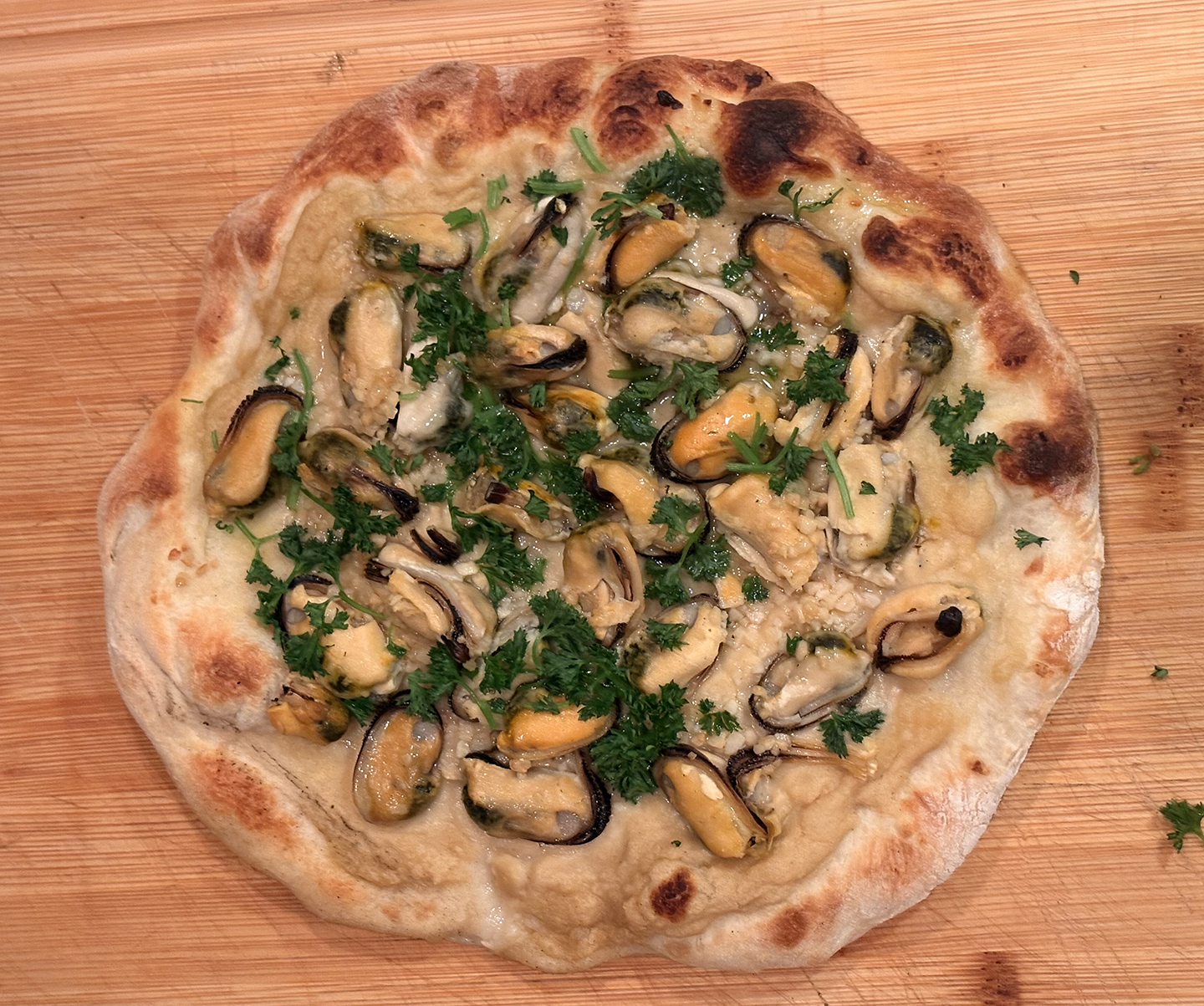
It was pizza night and I wanted to do something fun and a little unexpected, so I turned a pack of frozen mussel meat into a seafood gourmet pizza. Frozen mussels are already cooked and incredibly versatile, making them perfect for a quick, creative meal.
Instead of a traditional red sauce, I went Mediterranean and used lemon hummus as the base. I drizzled olive oil mixed with minced garlic and sea salt over both the hummus and the mussels to build flavor in layers.
The pizza baked at 475°F for about 10 minutes, until the crust was crisp, and was finished with fresh chopped parsley. Simple, bright, and absolutely delicious.
This pizza is easy to customize—use your favorite dough or flatbread, make it personal-sized or shareable, and swap in any hummus you love. Have fun with it and enjoy.
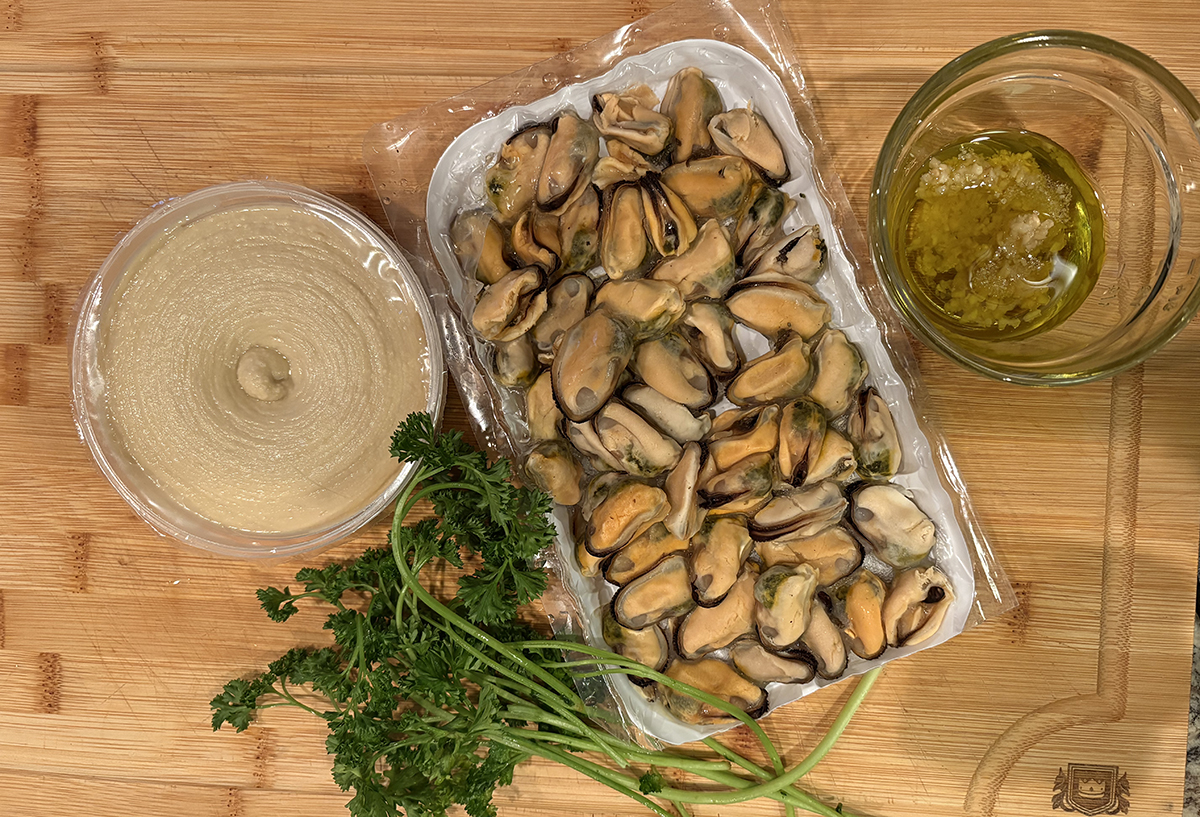
The main ingredients: hummus, mussel meat, olive oil with garlic, parsley.
This recipe is my take on the popular feta and tomato bake that was trendy on social media a few years back. For my version, I’m using spaghetti squash, grape tomatoes and a spreadable herbed cheese.
If you are not familiar with spaghetti squash, it is an oval shaped winter squash, and the outer skin usually has a light or bright yellow color. Similar to other winter squash, like butternut or acorn squash, there is a fair number of seeds and pulp that needs to be removed once cut open. The seeds can be seasoned and roasted like pumpkin seeds. However, the taste of this squash is a bit mild compared to butternut and acorn squash. The meaty texture also shreds after being cooked, which then makes it look like…you guessed it, spaghetti!
It is a healthy, nutritional alternative to traditional spaghetti if you are looking for a low carb pasta-type dish. Spaghetti squash absorbs whatever seasonings are rubbed onto the flesh as it bakes, which makes it the perfect base for the baked tomato and cheese topping.
While I do enjoy the taste of the traditional tomato and feta version, I wanted to bring more flavor to this dish, especially because spaghetti squash could be a bit bland on its own. In place of feta, I chose to use a spreadable, herbed cheese. Two of my favorite spreadable herbed cheeses are Boursin and Alouette. Both are usually available in the specialty cheese section, deli or refrigerated dairy section of the grocery store, and each comes in a variety of flavors. You can also use a crumbled feta, classic style or Mediterranean herbed, if you prefer.
What I enjoy about this recipe is that it offers lots of flavor, yet the steps are simple. It is also a good meal to prepare either during the week or for a nice Sunday dinner!
Baked Spaghetti Squash with Tomatoes and Herbed Cheese
1 large spaghetti squash olive oil Salt and pepper 2 teaspoons Italian seasoning, divided 1 container of spreadable herbed cheese (5.3 ounce Boursin or 6.5 ounce Alouette, your choice) 1 pint grape tomatoes, halved
Preheat oven to 425 degrees. Line a baking sheet with aluminum foil.
Cut the spaghetti squash in half lengthwise, scoop out the seeds and pulp. Gently pierce the flesh throughout with a fork. (*Note, you can pierce the squash with a knife and microwave it for a few minutes to help soften the outer skin for cutting)
Lightly brush the inside and edge of each half of the squash with olive oil. Season the oil-brushed squash with salt and pepper. Place both side face up on the baking sheet.
Coat both halves of the squash evenly with the spreadable cheese, then top each side evenly with the tomatoes and 1 teaspoon Italian seasoning.
Bake for 45 minutes, or until the flesh can be easily shredded with a fork.
Carefully use a fork to shred the cooked squash so it looks like spaghetti strands. Mix the melted cheese and tomatoes with the squash as you are shredding.
Place the shredded squash, tomatoes and cheese into a large bowl. Drizzle a bit of olive oil and stir to lightly coat the squash. Mix together and season with the remaining Italian seasoning, and salt and pepper to taste.
Freshly cut, seasoned, and filled, ready for baking.
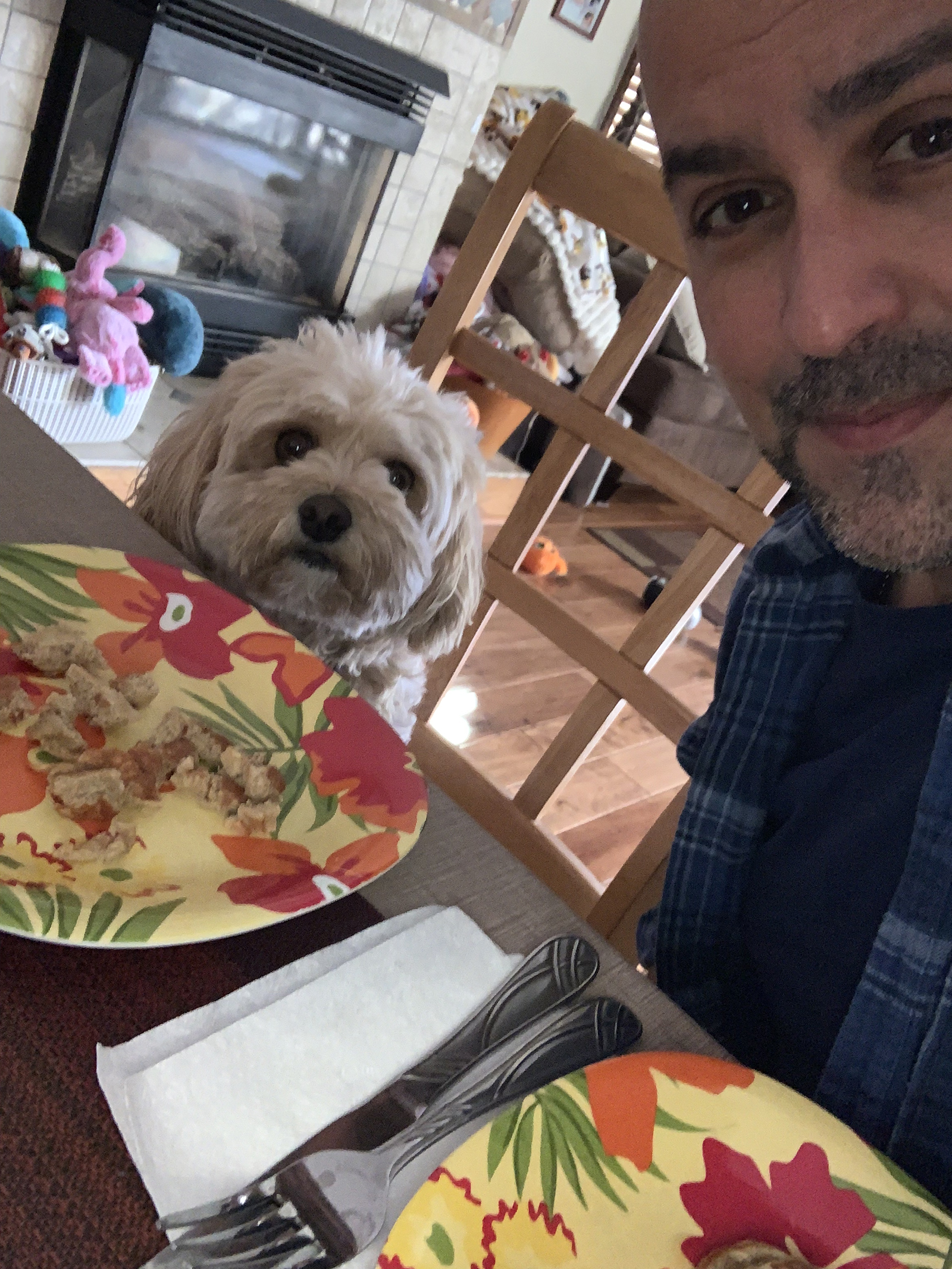
Breakfast is a big deal in my house—we love everything from breakfast sandwiches and omelets to French toast and, of course, pancakes. Recently, I found a Mediterranean diet-friendly banana pancake recipe that quickly became a staple for us. What makes it special? There’s no flour or added sugar. The pancakes are made with ripe bananas, oats, baking powder, cinnamon, vanilla extract, eggs, and a splash of milk. The bananas provide all the sweetness you need, making these pancakes both healthy and delicious. I make them so often that I keep a batch ready in the freezer, and even my dog gets to enjoy one or two!
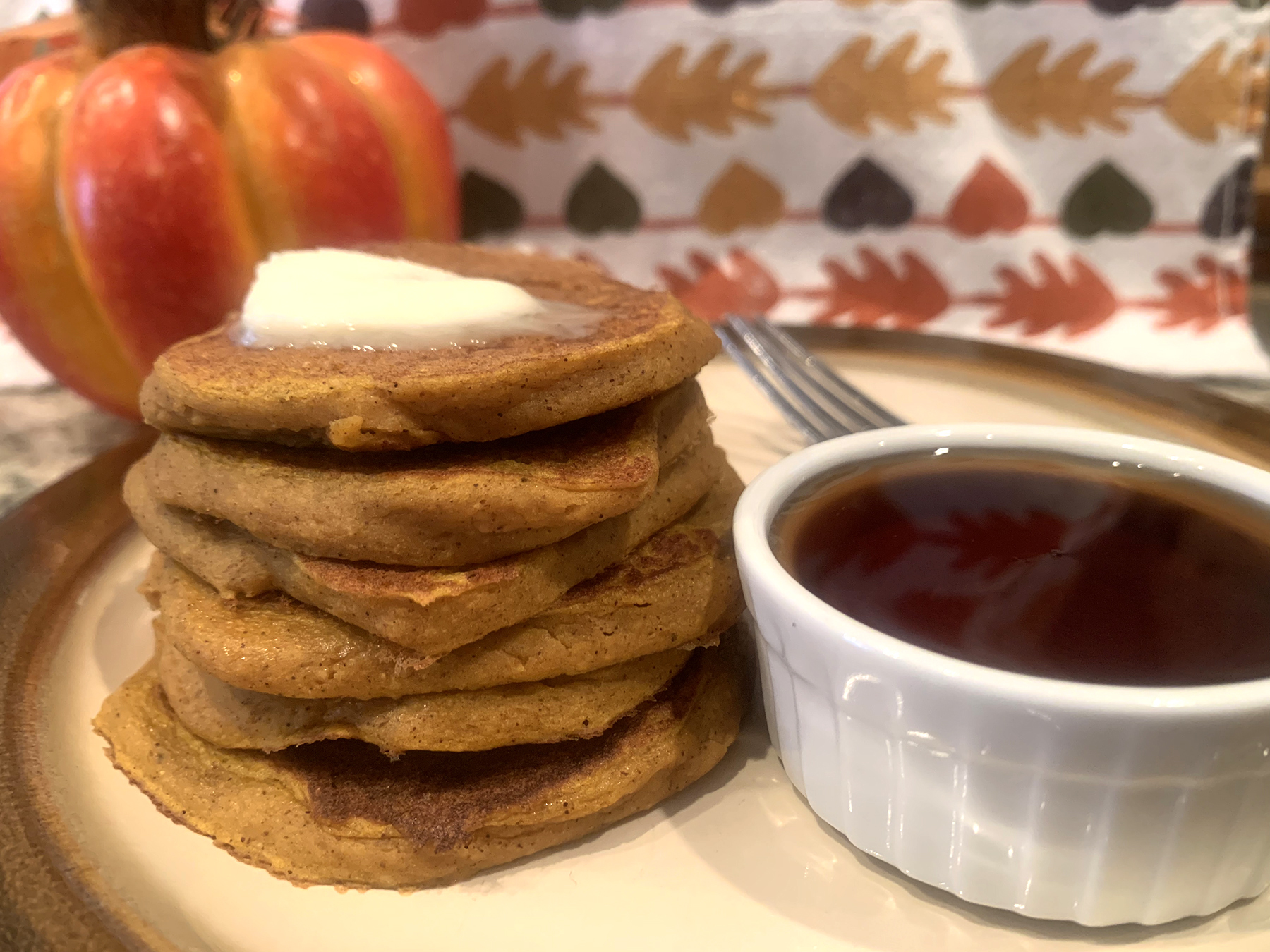
When fall arrived, I started thinking about how to adapt this recipe for pumpkin pancakes. I love cooking with pumpkin, but most recipes leave me with leftover pumpkin purée that ends up forgotten in the fridge. I wondered if I could use pumpkin butter instead, since it’s one of my favorite autumn treats. Unfortunately, that experiment didn’t work out—pumpkin butter is too runny and already sweetened, which led to mushy pancakes. Lesson learned: pumpkin butter is best as a topping, not an ingredient. Still determined, I tried adding a third cup of pumpkin purée and a half teaspoon of pumpkin pie spice to the original recipe. Success! The result was a batch of fluffy, flavorful, and healthy pumpkin pancakes. They were so good, I made another batch just to use up the rest of the purée—problem solved!
Pumpkin Banana Oatmeal Pancakes
Adapted from the Healthy Oatmeal Banana Pancakes recipe at ambitiouskitchen.com
2 medium ripe bananas (best when they have lots of brown spots)
2 eggs
1/2 cup milk of your preference (I like to use almond milk)
1 teaspoon vanilla extract
1 ½ cups quick oats
2 teaspoons baking powder
1/2 teaspoon ground cinnamon
1/4 teaspoon salt
1/3 cup pumpkin purée*
1/2 teaspoon pumpkin pie spice*
Olive oil, for cooking *omit if you do not want pumpkin pancakes
Add all of the ingredients (except for the olive oil) to a blender and blend on high until completely smooth, about 45 seconds. Let the batter sit in blender for about 3-5 minutes while you heat up your pan or griddle to medium heat.
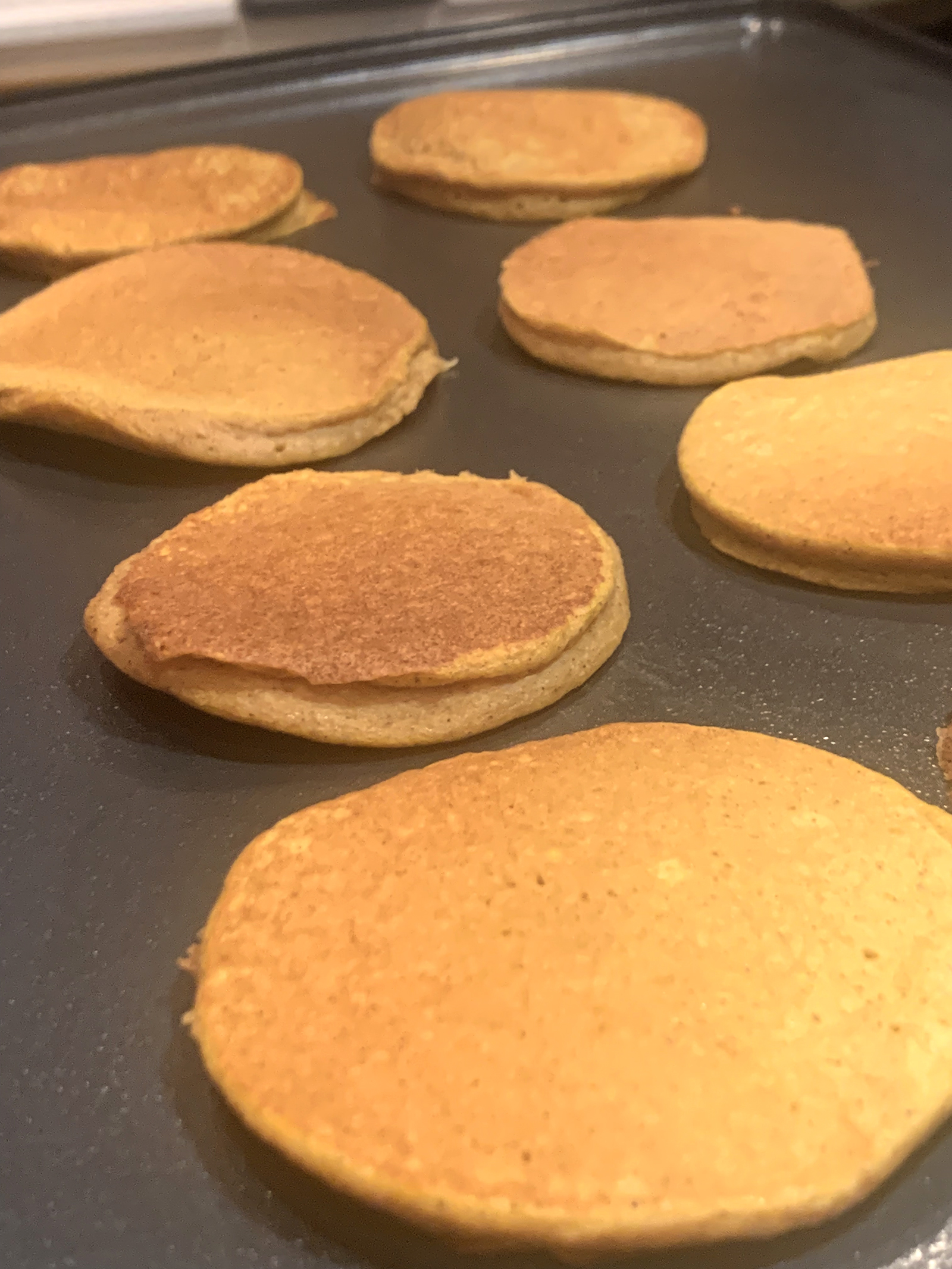
Lightly coat your pan or griddle with olive oil and place over medium heat. Once the surface is hot, add 1/3 cup of the batter to the griddle for each pancake and cook for 2-4 minutes until pancakes slightly puff up and you see a few bubbles along the edges.
Flip the pancakes and continue cooking for another two minutes or until golden brown. Serve immediately.
The batter will make approximately 7-9 regular size pancakes, or about 12-15 silver dollar size pancakes. You can also half the batter if you wish.
Refrigerate leftover pancakes in an airtight container for up to 5 days, or you can freeze them in a freezer bag for up to two months. To freeze leftover pancakes, place them individually on a baking sheet and place the baking sheet into the freezer. This will help avoid the pancakes from sticking together. Once frozen, you can place them into a freezer bag.
Lately I’ve been experimenting with the Mediterranean diet. Being one who has dealt with high cholesterol my entire life, heart health has always been a focus of mine. I’m also looking to find more reasons to be in the kitchen nowadays, it’s very therapeutic for me, always has been. I enjoy the challenges that come along with trying new recipes. Learning about the Mediterranean diet and all its health benefits has been a fun journey so far. I’ve collected several recipes through websites, magazines, and even treated myself to a new book by Mediterranean diet guru Suzy Karadsheh. You can follow her amazing website at themediterraneandish.com.
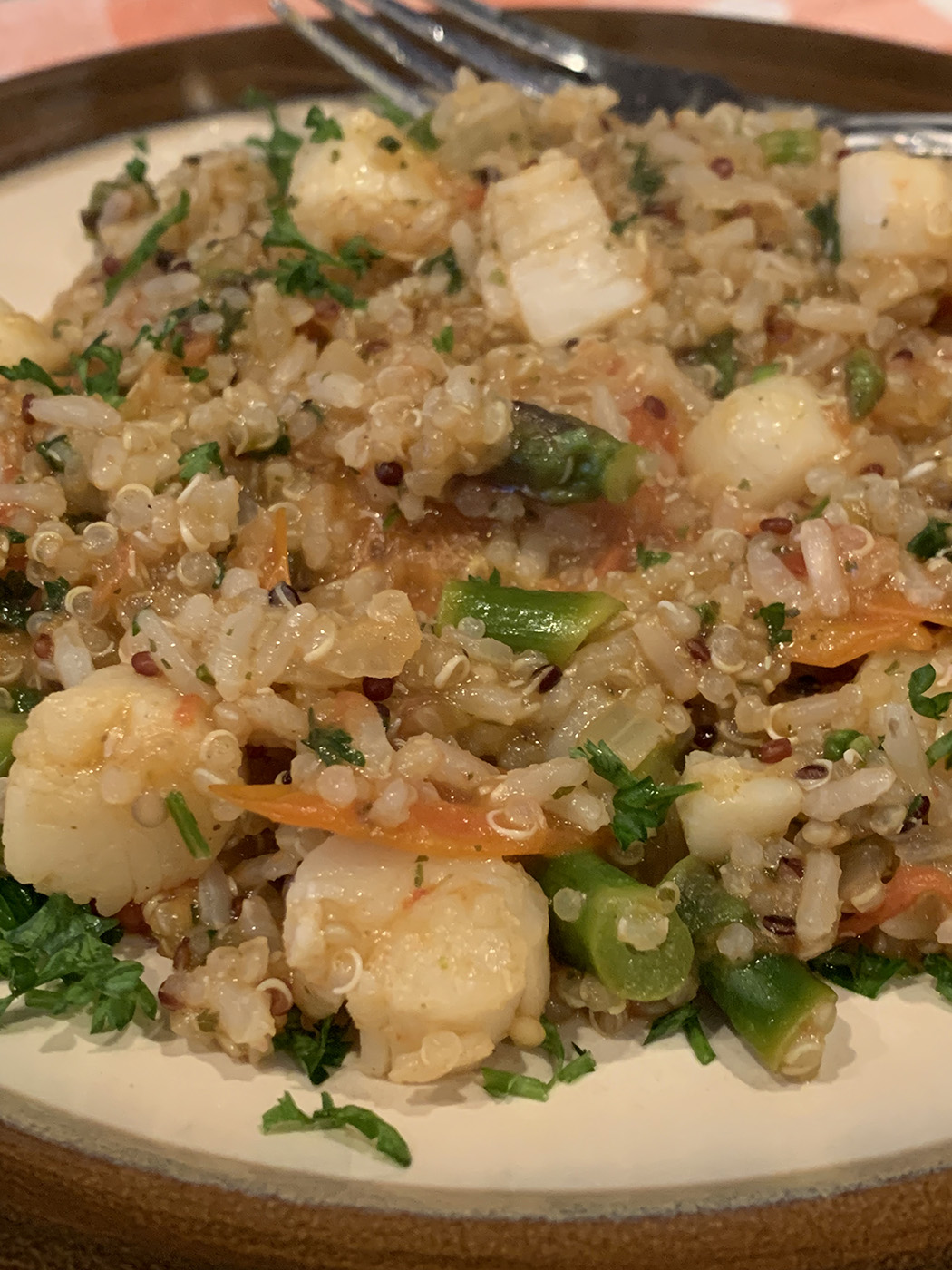
After spending some time doing research on the proper ingredients and cooking methods, I found myself inspired to give it a go with my own recipe. I’ve always been a fan of grains, such as couscous, farro, quinoa, and brown rice. These grains, along with many more, are often included in the Mediterranean diet. The recipe that I chose to experiment with uses a mixture of quinoa and brown rice as the base. To that, I added olive oil, shallot, cherry tomatoes, chopped asparagus, bay scallops, fresh chopped parsley, salt and pepper. I ended up with a quick and delicious, filling and heart-healthy meal. I even allowed myself a shortcut by using a Near East brand box of rosemary and olive oil quinoa and brown rice mixture.
I’m looking forward to spending more time researching the Mediterranean diet, its benefits, and its wonderful flavors… and I look forward to sharing the recipes here with you!
Bay Scallops, Tomatoes and Asparagus with Quinoa and Brown Rice
Makes 4 small or 2 large servings
One 4.9 ounce box Near East quinoa and brown rice blend, rosemary, and olive oil flavor (or you can use your favorite choice of prepared rice or grains) One shallot, finely chopped One pint cherry or grape tomatoes Two tablespoons olive oil 12-15 spears asparagus, 1/3 of the bottom removed and discarded, chop the rest to half inch size pieces 25 to 30 small frozen Bay scallops 1/4 cup chopped fresh parsley, plus additional for garnish Salt and pepper
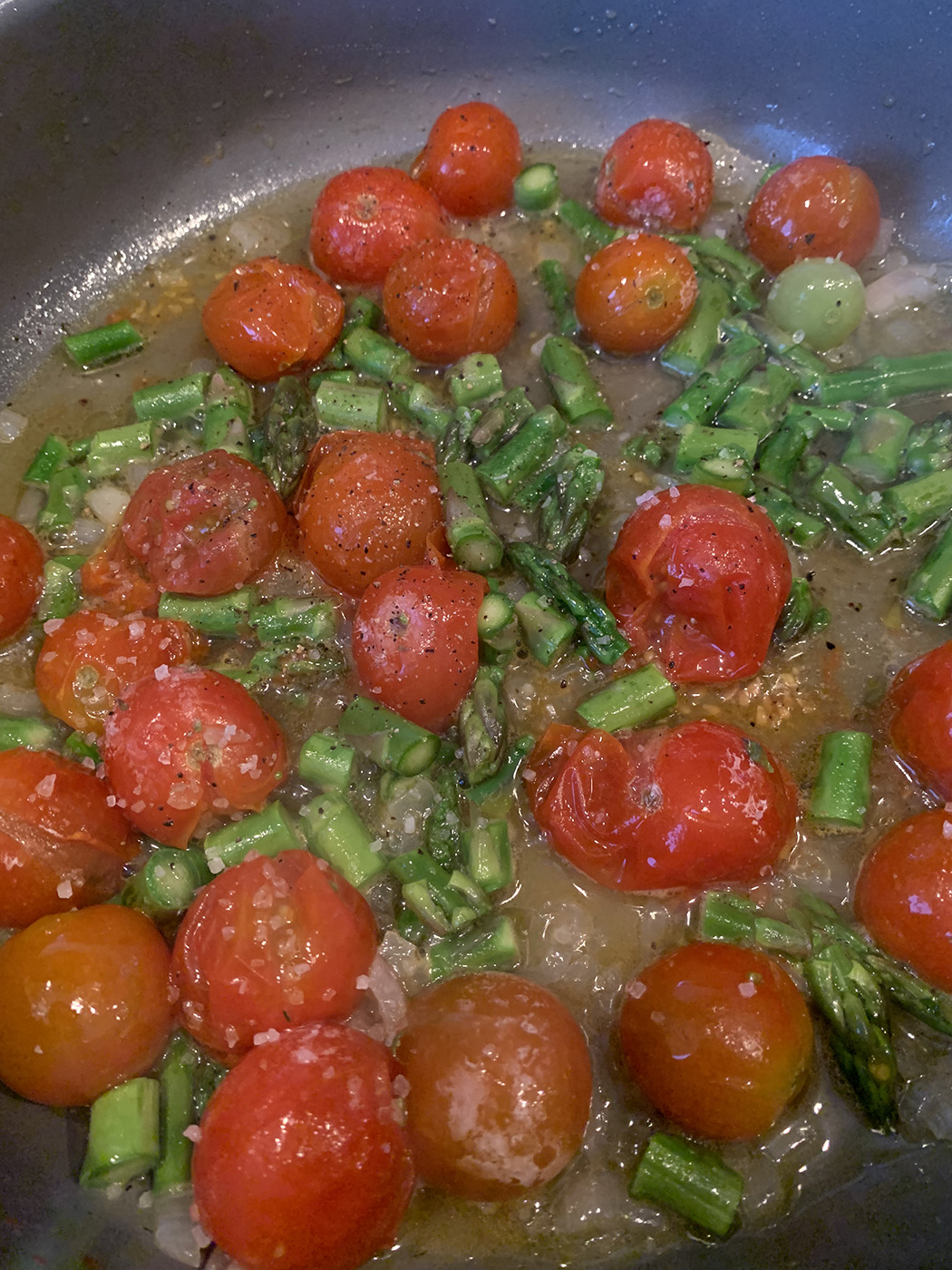
Prepare the rice according to directions, set aside when done. While the rice is cooking, heat oil over medium heat in a sauté pan. Add chopped shallot, heat until translucent. Add tomatoes, you can cut them in half or add them whole. Put a lid on the pan until the tomatoes start to soften. Add the asparagus, season with salt and pepper, cover again with the lid.
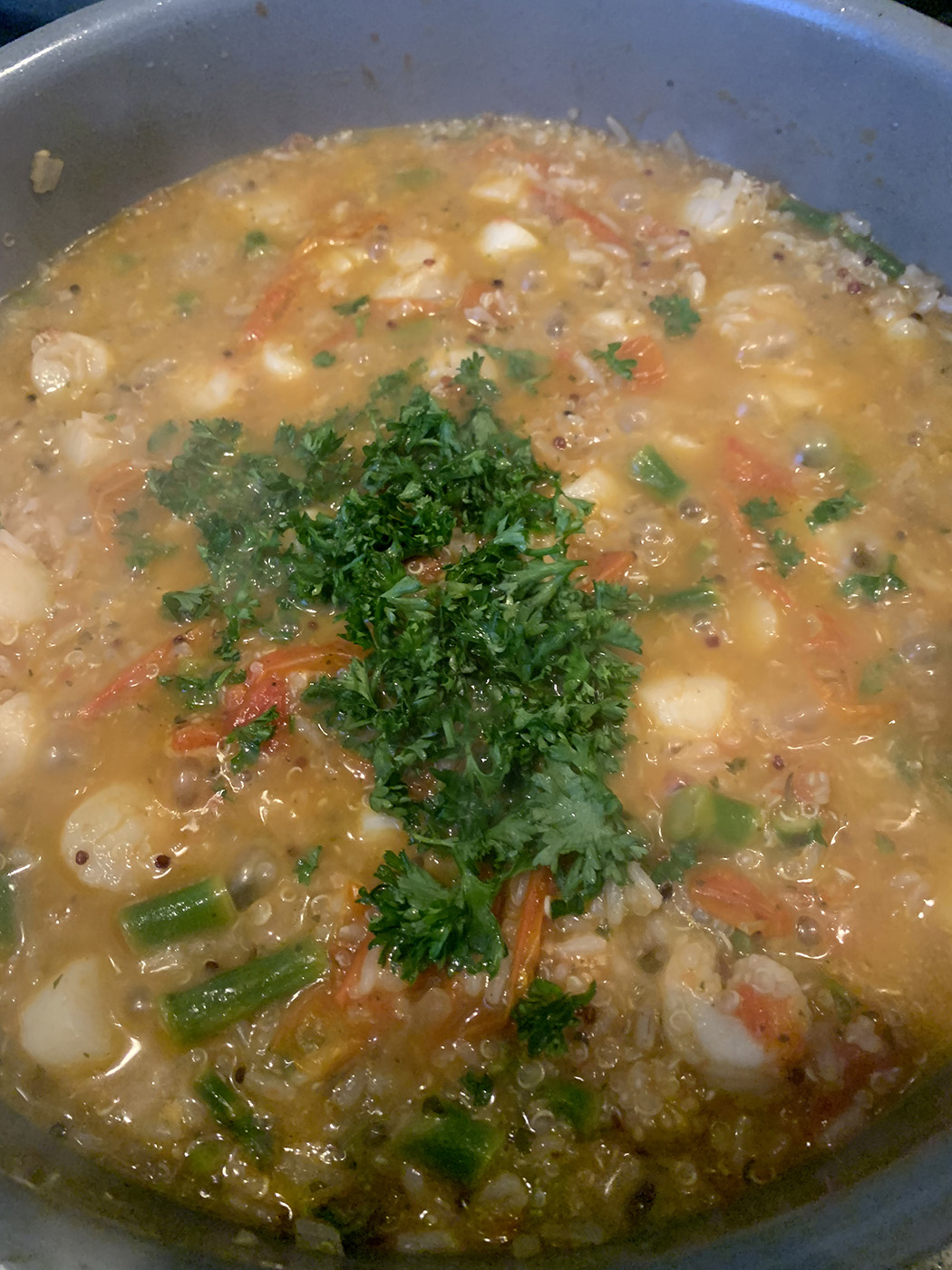
When the tomatoes start to break down and liquid starts to form in the pan, add the scallops (you can add them frozen), put the lid back on for 5-7 minutes. The scallops will cook within this time.
After the scallops are tender, stir the rice and chopped parsley into the pan. Continue to simmer with the lid off to allow the sauce to thicken.
Season to taste with salt and pepper. Serve with additional parsley as garnish.